How Often Should You Redesign Your Website?
I hear this question all the time. When business owners ask me about a redesign, my first response is usually another question: why?
You shouldn’t look for a reason or an excuse to redesign a website. It’s easy to get tired of how your site looks or to see a competitor do something flashy and feel like your website is outdated. Don’t make up a reason to spend thousands of dollars.
Redesign vs. rebuild
It’s important to be clear about what you actually need. To me, a redesign is a restyle. It’s changing colors, maybe moving from a light theme to a dark theme, or balance spacing.
But most business owners use “redesign” and “rebuild” interchangeably. For the rest of the article, I’ll use the term “redesign” to mean a full rebuild because that’s what most business owners are thinking, including you.
Here’s what that full rebuild process looks like for clients who work with us:
1. Discovery
Plan and research so we reach your goals. This includes keyword research, market research, and competitor research and lots and lots of planning.
2. Content management system (CMS) set up
Organize the backend of your website with custom databases (i.e., add custom post types to store different types of content, custom fields, and custom taxonomies for filtering, searching, and sorting your content). Structuring your website information this way makes your website scalable, maintainable, and performant for years.
3. Content writing and messaging
Write copy and add images for each page on the website.
4. Design webpage layouts
Use best practices in development so the website is scalable, easy to maintain, and looks great on desktop and mobile. Develop templates and page layout wireframes.
5. Style webpages
Add colors, spacing, graphics to the webpages. Match the border radius, border sizes, etc. with the brand.
6. Launch website
Optimize the website for page loading—the website needs to be snappy fast, set up website analytics, and perform final review with client before publishing.
In order to build scalable and maintainable websites, we use a very specific development tools: WordPress for storing and organizing the information and Etch for designing.
When is it necessary to redesign
There are really only two legitimate reasons to go through a redesign:
- You need new functionality that your current site simply cannot handle.
- You are no longer getting the leads, sales, or conversions you used to get.
If your website isn’t doing its job, then it’s time to look at what’s wrong. But don’t assume a redesign is necessary. Usually, it’s the messaging, which doesn’t automatically mean a redesign.
A message that was working may fail tomorrow
Consider an example like sunscreen. For years, you might have sold organic sunscreen by focusing on health. But if the public starts hearing that sunscreen is harmful, your style doesn’t matter. You have to change your messaging to overcome that new objection.
Changing the background color from blue to green won’t fix a message that no longer connects with your customers.
Why messaging matters more than style
Our local internet service provider is a great example. They recently launched a new site, but it has bright orange text and sliders with words you can’t even read. The design is so distracting that it actually harms the message.
Design should be almost invisible. It should assist the message, not get in the way. If you’re thinking about the design instead of the message on the page, the design has failed.

The trap of trends and animations
I generally advise against chasing trends. If you go after what’s “trendy” right now, your site will look dated twice as fast.
Distractions
Look at a company like Stripe. They use a lot of animations on their home page where icons move with your cursor. It’s pretty and interactive, but it costs a lot of time and money to design. More importantly, it distracts visitors from taking the one action you actually want them to take.
My approach to web design is to keep it simple:
- Avoid background videos that are just there for “feeling.”
- Use video only when it is part of the message.
- Focus on “you” messaging that talks to the customer about their problems.
- Make it easy for your users to navigate and understand.

My traffic dropped, do I need a redesign?
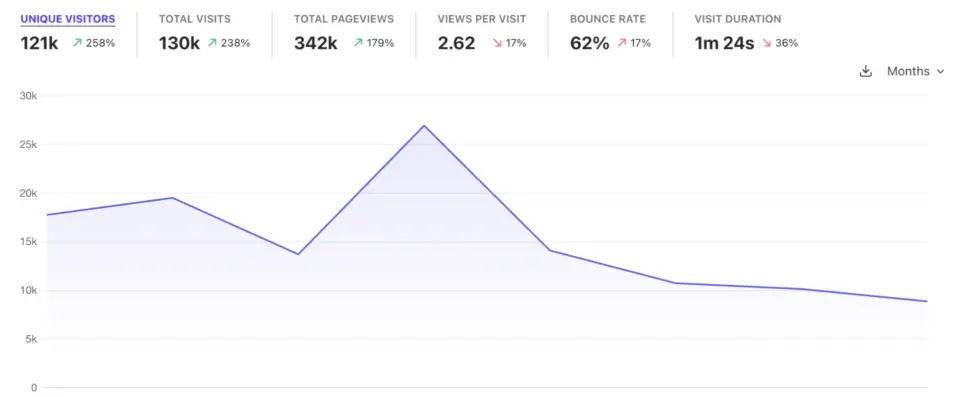
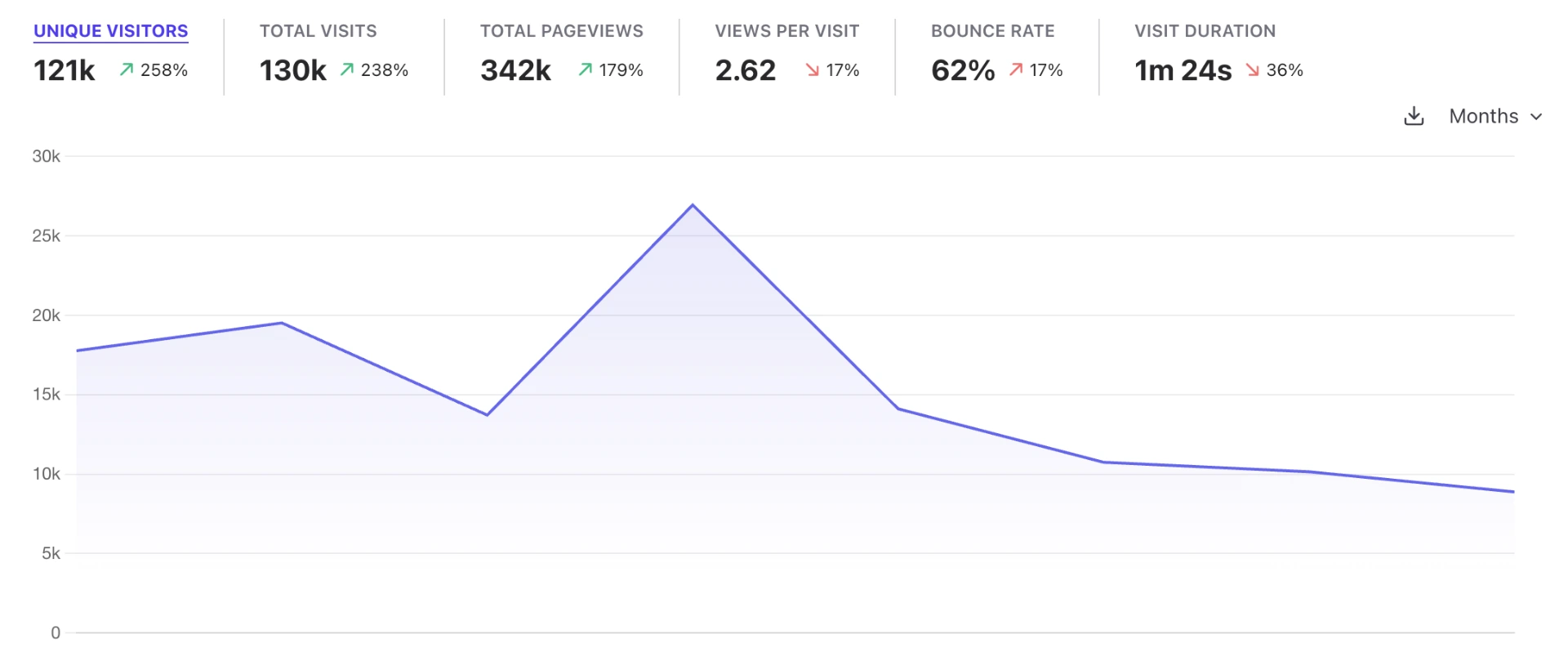
You might notice your traffic is down, but that doesn’t always mean your website is broken. We had a client in 2024 who saw a major drop in traffic even though they were still ranking well.
They had been getting over 20k monthly users and then almost overnight it dropped by 50%.
This was concerning but when I researched the cause, I discovered their rank had not changed but Google was now providing an AI answer for their top ranking article. People were no longer clicking over to their website and were finding what they needed on the Google Search Results page.
This is common and probably will become more common for the next few years.
Your traffic might change, but your leads and sales should still be going up. If it’s not, then there’s a problem that needs more investigation. It could be as simple as a messaging update.
When to schedule a redesign
If you decide a redesign is necessary, think about the timing. A redesign takes a lot of focus and energy from you as the business owner.
- Choose a time of year when you have the bandwidth to focus.
- If your business is seasonal, try to do it during the slow season.
In closing
The biggest mistake you can make is focusing on the style while ignoring the words. Most business websites are not that great because they talk about “us” and “what we do” instead of your customer. You can have the most modern, flashy site in the world, but if you aren’t talking to your ideal customer about their specific problems, you won’t see the results you’re looking for.