How to Keep AI-Assisted Writing From Sounding Like AI
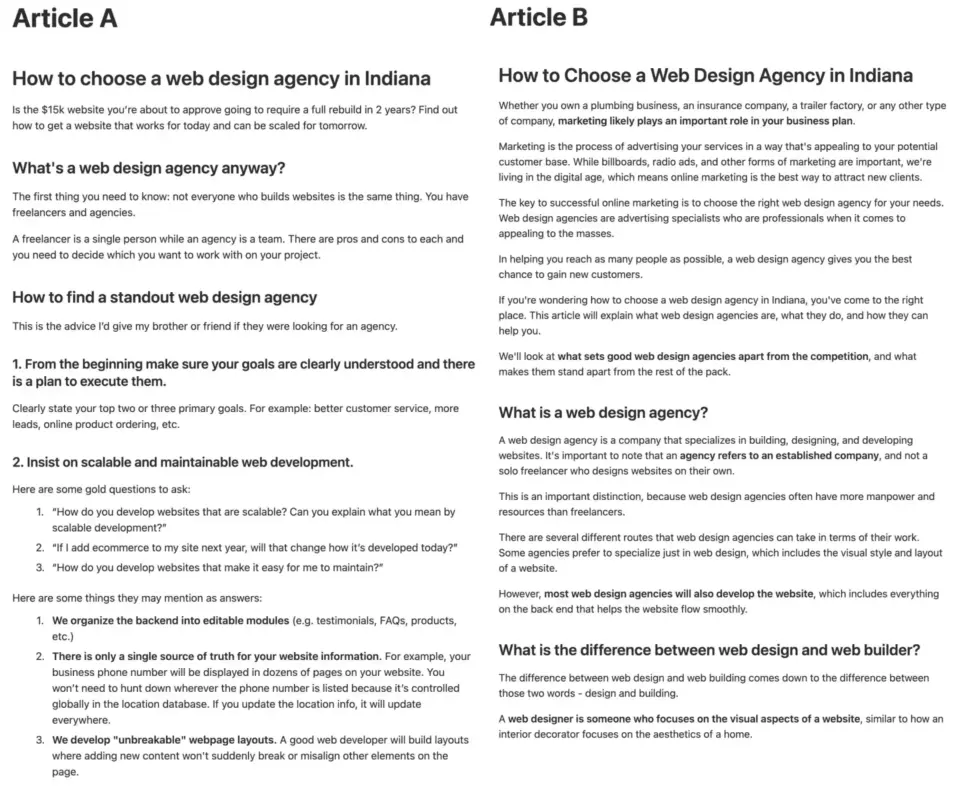
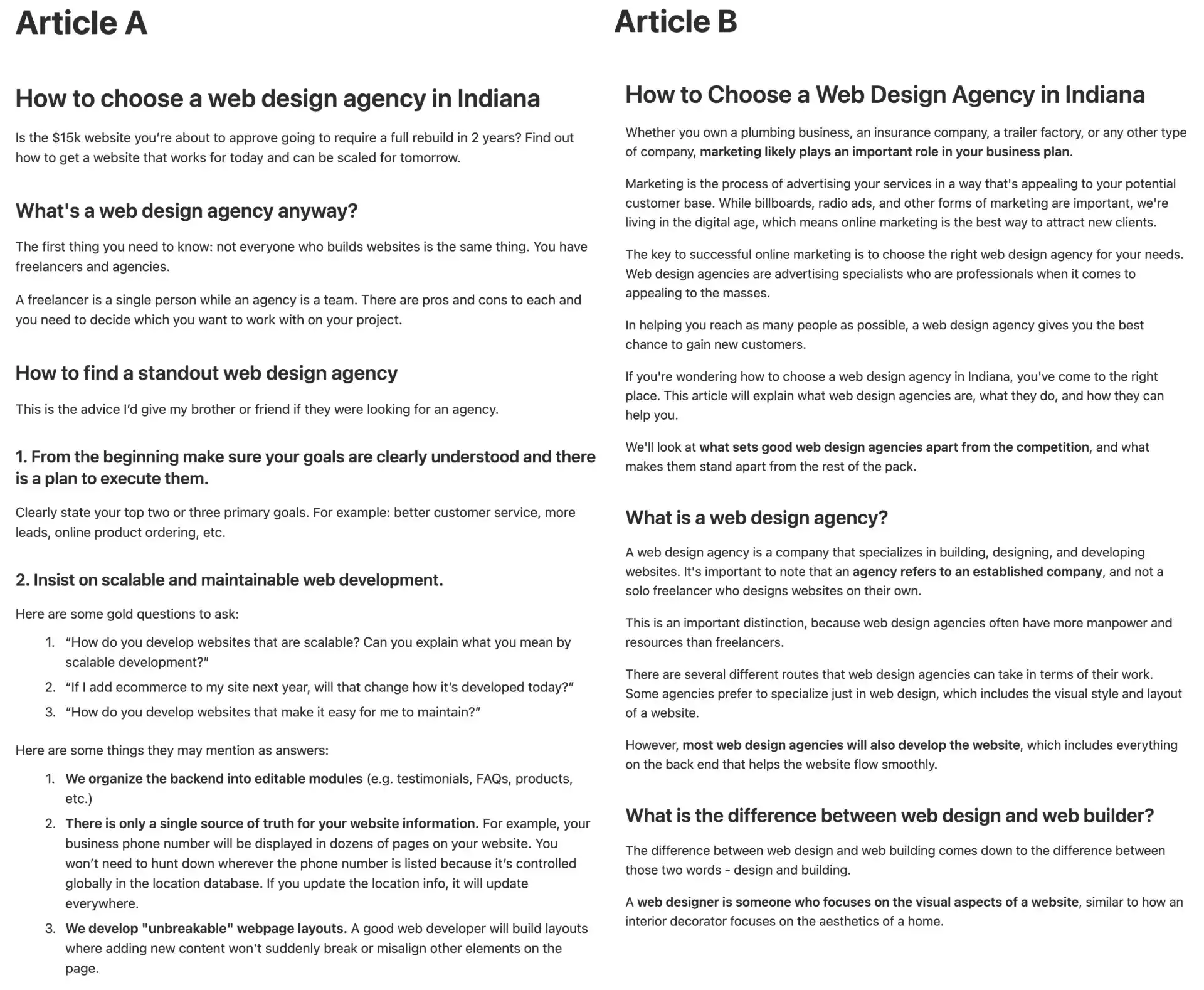
I handed someone two articles on the same topic. One was written by a ghostwriter we paid. The other was written with the help of AI. She picked the AI as the one she liked better and thought the ghostwriter one sounded like AI.
With AI, it's easier than ever to create content. So there's more of it around. Written articles, video, social media posts, etc.
But just because it's easy doesn't mean it's good. A lot of it is bad. And with so much of it around, people are getting better at telling when something was made with AI.
We use AI to help research and write our content too. That's not the problem. The problem is content that sounds like AI. People dismiss it right away because it doesn't sound authoritative. It doesn't sound genuine. So they don't trust it.
People trust people, and when something feels a little "off," instead of trust, you get suspicion.
Here's how I'd compare it to getting pulled over by the police. Ten years ago if you saw flashing lights behind you, you'd stop. It's obviously a police car. Today, if something looks or feels off, you probably would still pull over and stop but you're not going to roll your window down.
Content sounds like AI for 2 reasons:
- It's full of habits AI falls into. These are mostly obvious.
- The voice doesn't match the person or the situation.
You avoid both by starting with your own words and using AI to help, not to do the thinking for you.
Some of what tips people off is subconscious. Some of it is obvious.

The obvious tells
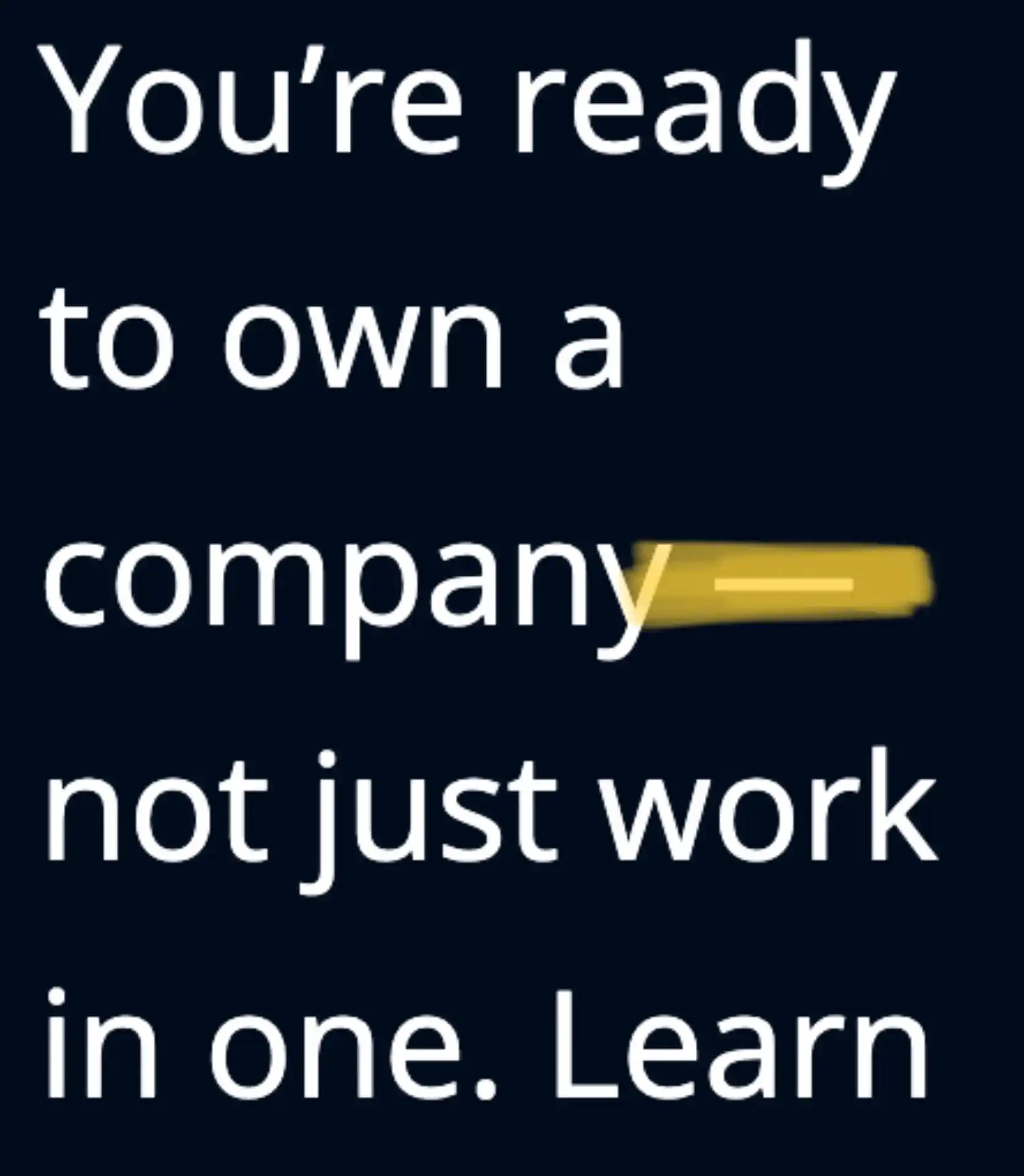
The long dash
AI loves the long dash. There's a short dash (a hyphen), -, an en dash (as in Nancy) –, and an em dash — (as in man). The em dash is the one AI loves. If you haven't noticed it yet, you'll start seeing it everywhere.
Lists of three, over and over
Ask AI to write a headline about a product and give it a few facts. It will often come back with something like "a product that is safe, reliable, and easy to use."
This one is harder to spot because humans do it too. When we write out benefits, we often list 3, because a list of 3 is easy to read and easy to understand.
So I'm not saying never use a list of 3. But if a long web page or article uses it every time, that's a sign AI was involved.
"Not only this, but also that"
Same idea. People say it. But if it shows up again and again, it's a sign.
Certain words and phrases
The list changes. Two years ago it was a different set of words. Here are some that come up now:
- "It is important to note"
- "In today's fast-paced world"
- Delve
- Realm
- Landscape
- Unlock
Unlock was a big one.
Again, I'm not saying never use these words. They're flags to keep in mind and limiting or removing them will help your content sound less like AI and more like you.
The subtle tell: a voice that doesn't fit
Sometimes you can't point to one word. You read something and think, this sounds a little off.
I was reading a response to a support ticket from SureCart, the ecommerce platform we use. It was a great response. But some of the phrases made me think AI helped write it. It just sounded a little off. I think part of it was that it sounded too formal.
Content can sound too casual, too. The real tell is when the tone or the voice doesn't match the situation. You may not be able to explain why, but it just feels off.
It's even easier to spot when you know the person in real life. If their social media posts don't sound like them, it's probably not them.
The fastest way to sound like you
If you're worried your content sounds like AI, get in front of a camera, answer a question, and just talk.
Yes, there are AI-generated videos. But yours won't look like one. There will be some mistakes. There will be things in the background, like a sweeper hanging on the wall. Some things will be imperfect or unpolished, but that's what makes it feel real.
That's what makes it authentic. That's what makes it trustworthy.
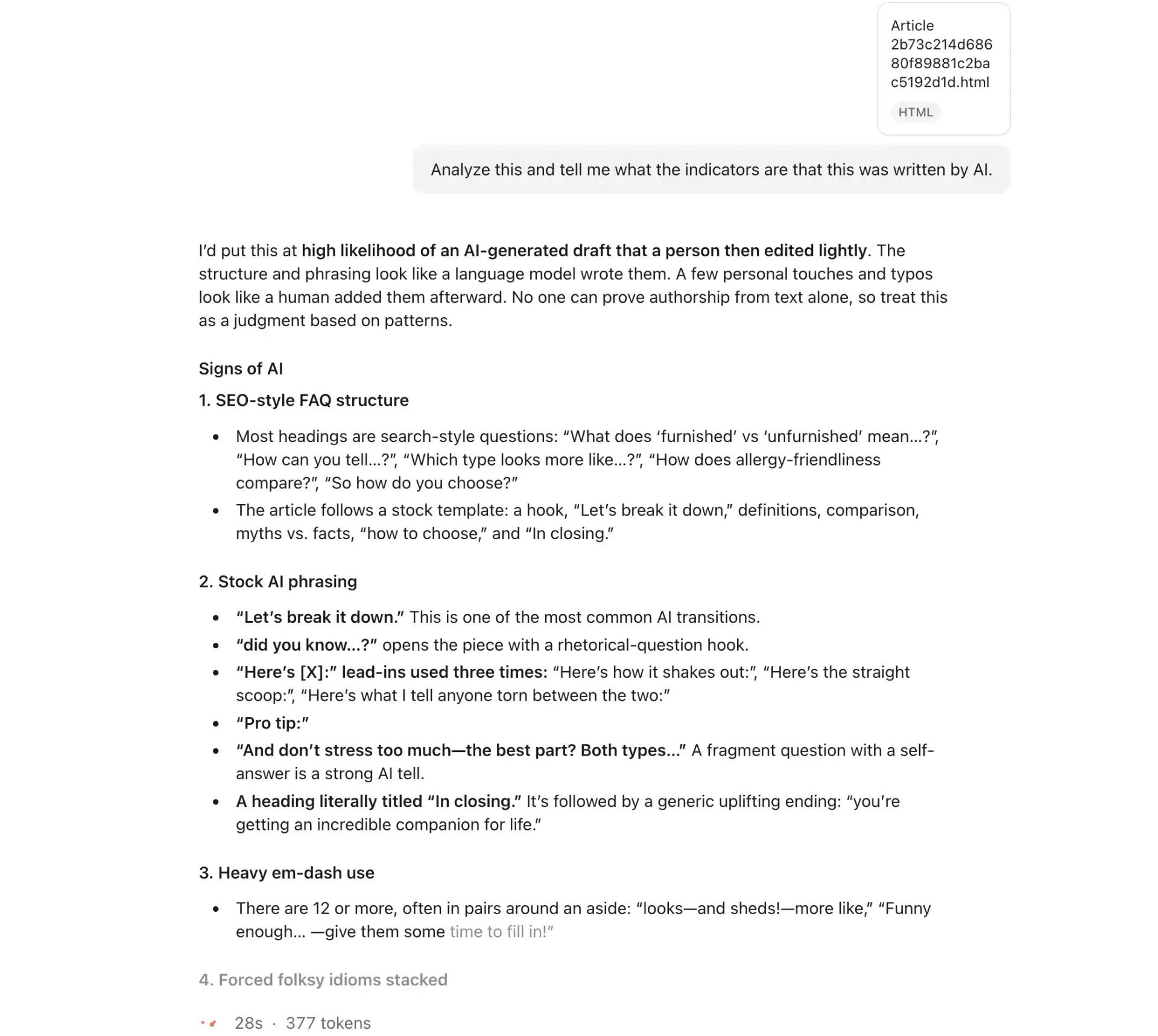
Check your draft in a different chat
This is a good practice once in a while. When you write a social media post or an article, open a different chat and paste it in. Then ask:
Analyze this and tell me what the indicators are that this was written by AI.
Here's our AI-assisted writing process
What you don't want to do is go to Claude, or your AI of choice, and say, "Write me an article answering this question." It's going to sound insanely generic.
Here's what we do.

1. Pick a question real people are asking
There are a few ways to do this:
- Google it. It's free. Type in a question, and somewhere on the results page you'll see related questions. Those are questions real people are asking.
- Ask your AI. It can check Reddit and other online forums for questions people ask about the product or service you offer.
- Use an SEO tool. We use Ahrefs. It's paid, but it shows what people search for, and we find questions in those searches.
2. Find the follow-up questions
Use your brain here. AI can help, too. Find follow-up questions related to the main question, so the article goes past the first answer and provides depth.
3. Interview the topic expert
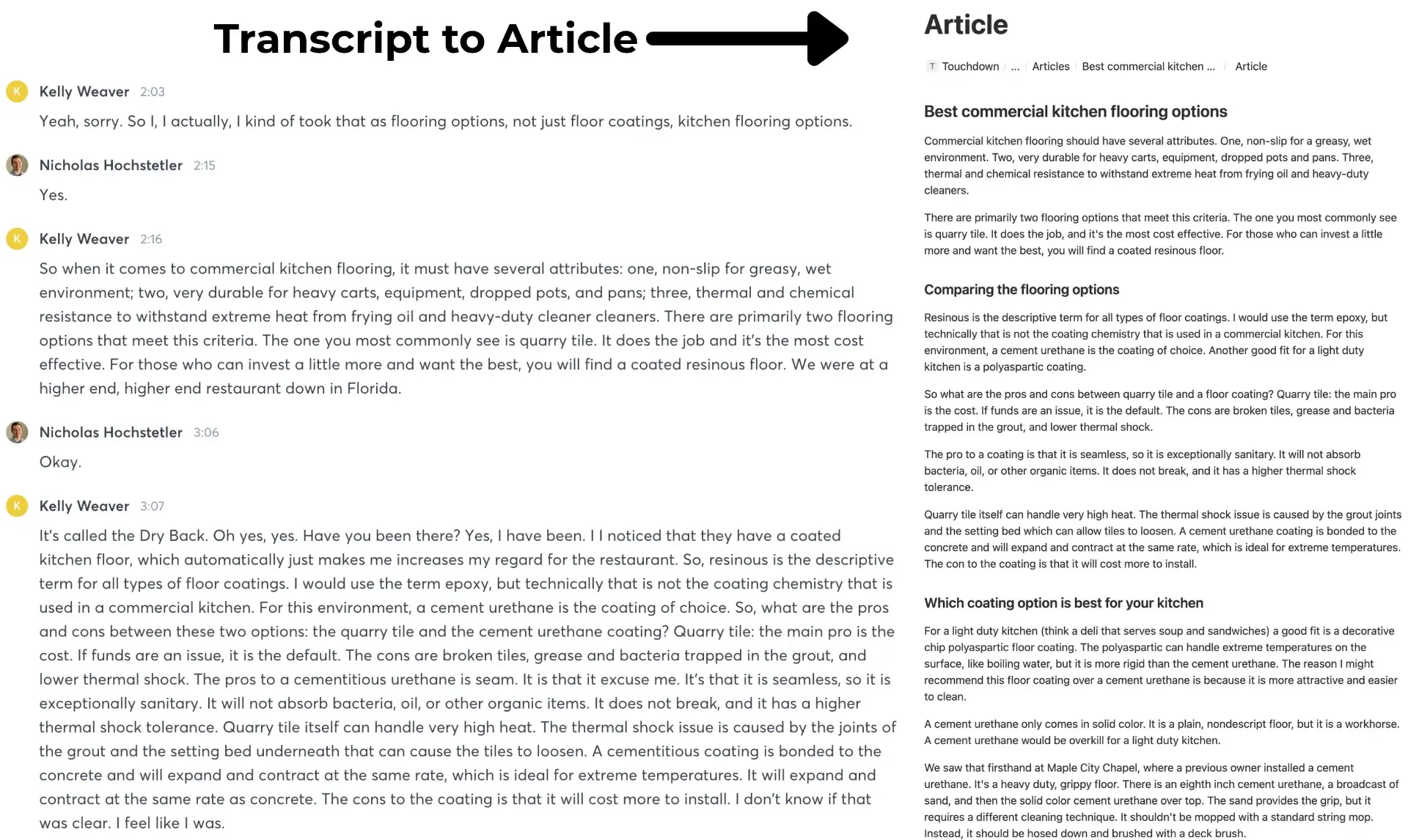
With clients, we interview them. We ask the main question, then the follow-up questions, and record it.
4. Give AI the transcript
We feed the transcript of that interview to AI to help write and structure the article. It's their words, not the AI's. Our instructions cover:
- Length. As long as necessary, and not one bit longer. We're not stuffing in words to hit a target number.
- Structure. An intro, a body that answers the question, and a conclusion. Ours is a lot more detailed than that, with extra levers inside.
- Who the topic expert is, with a little detail about them.
- Who the target reader is.
That last one is really important. Who your reader is may be obvious to you as the business owner. It's not obvious to the AI. It may write as if your reader is a lawyer when you want it written for a stay-at-home mom. Or even more specific, a stay-at-home mom with 3 kids, ages 2–7.
The more specific, the better it gets.
5. Review, edit, and send it back to the expert
AI is going to get things wrong. Some of it is going to be dumb.
So we read through it. We review, edit, tweak, and adjust it. Then we send it back to the topic expert to review. We go back and forth with the topic expert, and once it's finished, we schedule it to publish.
6. Feed the approved articles back in
Over time, we give finished, approved articles back to the AI as examples. We tell it, "This is how we want the writing for this person and this brand to sound." Every example gives it a little more context.
What it saves, and what it doesn't
This doesn't take writing an article from 6 hours down to 15 minutes. It still takes a lot of time.
The benefit is that the articles sound like the topic expert, because they're built on words the expert uses in conversation.
One of our clients is a good example. I don't know her very well. But I've heard Nicholas interview her, and I've had a handful of meetings with her. The articles sound like her. It's her information and her tone. She's just not the one typing.
Why we switched from a human ghostwriter
We used to hire a ghostwriter. The process was the same up to the writing: we did the interview, recorded it, and sent it to the writer.
I was very skeptical about AI even assisting with writing. Over time my mind changed a little, so I ran a comparison.
I took 2 articles on the same topic. One was written with the help of AI. The other was written by the ghostwriter we hired. I showed both to my wife and told her one was written by a real person and one was written by AI.
She thought the one written by the human was the AI one.
At that point, I knew we had to switch.
It does take more editing time from Nicholas, who manages our content. As he put it, "It's worth it if it's better content and better articles."
Polished and fake loses to rough and real
I watched a video a few months ago about the old Amish ways of building, fixing up, and maintaining your home. Less expensive, more efficient, easier, lasts longer. It covered topics I'm interested in.
But I ended up very turned off and lost trust in the content. The video was AI generated, and I couldn't find out who was behind it.
I might have been fine with an Amish avatar as a spokesperson if the creator had been upfront that they weren't actually Amish. But it was impossible to find out who was behind the brand. They even had a paid online community, with the Amish guy and his Amish wife as hosts (AI generated images and videos).
I was very close to spending a hundred dollars on the guide they were selling. Then I thought, I don't even know who this person is. So I didn't.
They would have been better off with a less produced video. Just a real person talking to the camera, sharing what they've learned and what they know. Instead they went all out trying to look polished and real, and it ended up obviously AI. Six fingers on a hand. An Amish person with a TV. Things that just don't make sense.
Be open, then test it
Don't bury your head in the sand about AI.
I was very resistant to using it for writing. I thought it was too easy to tell when AI wrote something. A couple of things helped me be open to the idea before I ever tested it.
So be open to it. Then test it. Verify it. Make sure it works for your use case.
If it's better, make the switch. If it's not, stick with what you're doing now.
If you have a question about using AI for your content, or you want help creating articles for your website, go to touchdowntech.com. There's a link to schedule a meeting with us, and we'll get started from there.